Choosing a DJ academy is an important decision if you are serious about learning DJing professionally. The right academy can help you build strong technical skills, understand real-world performance workflows, and develop the confidence needed to perform in front of an audience. The wrong one can leave you with incomplete knowledge, limited practice time, and very little understanding of how professional DJing actually works.
With more DJ schools and music academies appearing across India, students now have more options than ever. But that also makes it harder to know which academy genuinely offers professional training and which one simply teaches the basics.
If you are searching for the best DJ academy in India, do not choose based only on advertisements, course fees, or social media followers. Look deeper into the quality of training, faculty, equipment, practical exposure, and the overall learning environment.
Here are 10 important things to check before you enrol.
1. Check the Experience of the Faculty
The quality of your instructor can have a major impact on how quickly and effectively you learn.
DJing is not just about understanding buttons, software, or equipment. A good instructor should be able to explain how DJs think during a live performance, how they read a crowd, how they select tracks, and how they recover when something goes wrong during a set.
Before choosing an academy, check whether the trainers have genuine industry experience.
Look for faculty members who have:
- Performed professionally
- Worked with different DJ setups
- Experience across multiple genres
- Knowledge of club and event environments
- Real-world music industry exposure
Experienced mentors can teach practical techniques that are difficult to learn from tutorials alone.
A strong academy should also clearly introduce its faculty on the website rather than simply using terms like “industry experts” without providing any background.
2. Look for Hands-On DJ Training
DJing is a practical skill. You cannot become confident by only watching demonstrations or attending theory classes.
A professional DJ course should give students enough time to practise on the equipment themselves.
Hands-on training should include:
- Beatmatching
- Cueing
- EQ control
- Track transitions
- Using loops and effects
- Setting cue points
- Building DJ sets
- Live mixing practice
The more time you spend actively mixing, the more comfortable you become behind the console.
When comparing academies, ask how much practical training is included in the course and whether students receive individual practice time.
The best DJ academy in India should focus on skill development rather than simply completing a syllabus.
3. Check the DJ Equipment You Will Train On
Equipment plays a major role in professional DJ training.
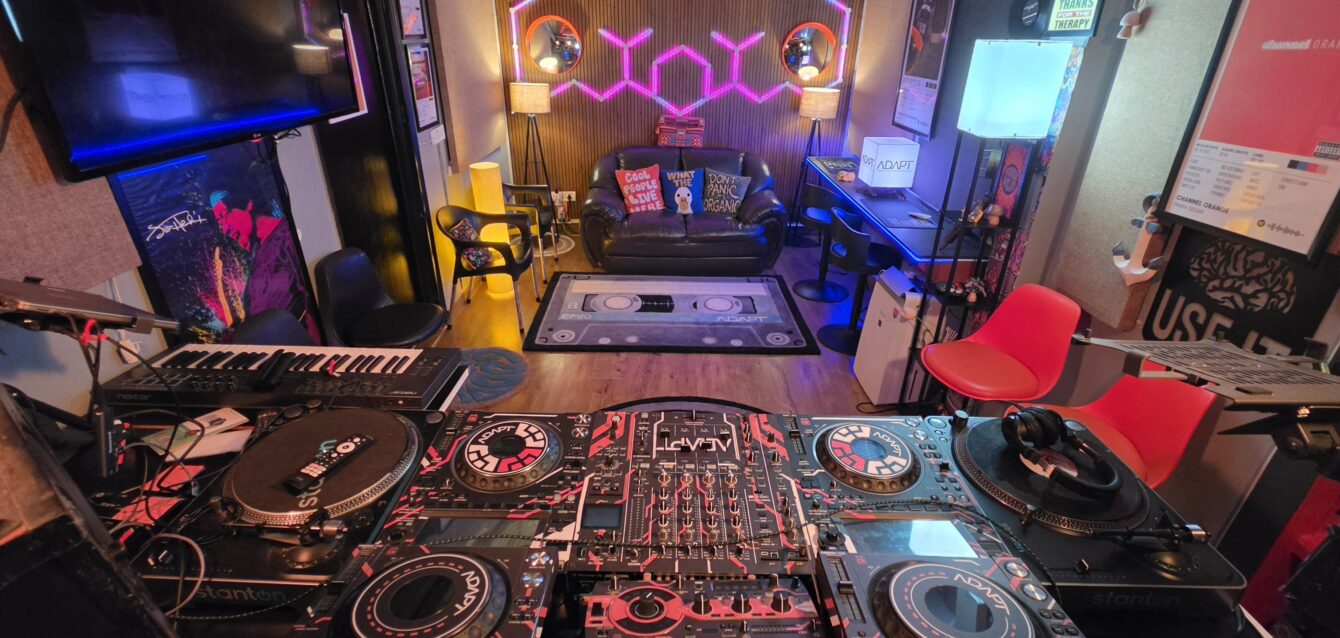
Beginners may start with controllers, but students who want to perform professionally should gradually become comfortable with club-standard DJ setups.
A good DJ academy should expose students to equipment such as:
- Professional DJ controllers
- CDJs
- DJ mixers
- Professional headphones
- Monitor speakers
- Rekordbox or other DJ software
- Club-style setups
Learning on professional equipment gives students the confidence to walk into a club, event venue, or studio and understand the setup.
Before enrolling, visit the academy if possible and look at the equipment students actually use during training.
4. Review the Course Curriculum Carefully
Two DJ courses may have similar names but completely different depth.
A beginner program may cover only basic mixing, while a professional course should provide a more structured progression.
Look for a curriculum that covers:
DJ Fundamentals
Understanding BPM, beats, bars, phrases, track structure, and music genres.
Beatmatching
Learning how to match tracks manually and maintain timing.
Mixing Techniques
Using EQ, filters, transitions, cue points, loops, and effects.
Music Library Management
Organising tracks, playlists, tags, and preparing music for performances.
Performance Skills
Building sets, managing energy, reading audiences, and preparing for live environments.
Software
Learning professional DJ software such as Rekordbox.
A clear curriculum helps you understand exactly what you are paying for.
5. Check Whether the Course Matches Your Skill Level
Not every student starts at the same level.
Some students are complete beginners, while others may already understand basic DJing and want to learn advanced mixing techniques.
A good academy should offer different learning levels, such as:
- Beginner DJ training
- Intermediate programs
- Advanced DJ courses
- Professional performance training
If the academy places everyone into the same program regardless of experience, you may either feel overwhelmed or waste time learning things you already know.
Ideally, the academy should understand your current skill level before recommending a course.
6. Look at Student Performances and Success Stories
One of the best ways to evaluate a DJ academy is to look at what its students have achieved.
Check for:
- Student performances
- Event appearances
- Club gigs
- Recorded DJ sets
- Testimonials
- Alumni stories
- Video feedback
Real student outcomes provide much stronger evidence than promotional claims.
When academies regularly showcase students performing confidently, it usually indicates that practical performance training is part of the learning process.
Also look beyond testimonials such as “great course” or “amazing academy.” Detailed student experiences are far more useful.
7. Check for Workshops and Masterclasses
DJing and electronic music evolve constantly.
New equipment, software, production techniques, and performance styles appear regularly. That is why workshops and masterclasses can be extremely valuable.
A good music academy may organise sessions with:
- Professional DJs
- Music producers
- Sound engineers
- Artists
- Music industry professionals
These sessions give students exposure beyond the regular course curriculum.
They can also help students understand how professionals approach their careers, creative process, branding, and performances.
If an academy regularly hosts masterclasses, it is often a sign that it is actively connected to the music industry rather than functioning only as a classroom.
8. Compare DJ Course Fees and What You Actually Get
DJ course fees in India vary widely.
It can be tempting to choose the cheapest option, but price alone does not tell you whether a course offers good value.
Instead, compare what is included.
Ask:
- How many sessions are included?
- How long is each session?
- Is practical equipment time included?
- Are classes private or group-based?
- Who are the instructors?
- Is the equipment professional?
- Are additional practice sessions available?
- Is there performance training?
- Are workshops included?
A slightly more expensive course may offer much better value if it includes professional equipment, experienced mentors, and more practical training.
Think about the course as an investment in skills rather than simply an expense.
9. Look for Flexible Learning Options
Students today have different schedules and learning preferences.
Some may prefer traditional academy-based classes, while others may need online training or private sessions.
A modern DJ academy should ideally provide flexible learning options such as:
- On-ground classes
- Online DJ training
- Private mentorship
- Home DJ training
- Weekend sessions
- Flexible schedules
This is especially useful for working professionals, students, and learners outside major cities.
Adapt Music Academy, for example, offers multiple learning formats, allowing students to choose the approach that suits their schedule and goals.
Flexibility should never mean compromising on training quality. The key is to ensure that practical guidance and mentor interaction remain part of the course.
10. Check Whether You Can Progress into Music Production
Many DJs eventually want to create their own music.
Producing original tracks can help DJs build a stronger artist identity and create more opportunities in the industry.
That is why it can be useful to choose an academy that teaches both DJing and music production.
After developing DJ skills, students may progress into areas such as:
- Ableton Live
- Electronic music production
- Beat making
- Sound design
- Arrangement
- Mixing and mastering
Learning both DJing and production can help artists move beyond simply performing other people’s tracks and begin developing their own sound.
Why Adapt Music Academy Is a Strong Choice for Aspiring DJs
Adapt Music Academy focuses on practical, professional, and mentor-led training for students who want to learn DJing seriously.
The academy offers training for beginners as well as students looking to develop more advanced DJ skills.
Students benefit from:
- Industry-experienced mentors
- Professional DJ equipment
- Hands-on learning
- Structured DJ programs
- Advanced DJ training
- Music production courses
- Ableton training
- Workshops and masterclasses
- Online learning options
- Private home DJ training
The goal is not simply to teach students how DJ equipment works, but to help them develop the confidence, musical awareness, and technical skills required for real DJ environments.
For students who later want to move into music creation, Adapt also offers professional music production programs, making it possible to build both DJ and production skills within the same learning ecosystem.
Final Thoughts: Choosing the Best DJ Academy in India
Finding the best DJ academy in India is not about choosing the academy with the biggest advertisement or the lowest course fee.
Look for a place that provides:
- Experienced mentors
- Practical training
- Professional equipment
- Structured courses
- Performance preparation
- Student success stories
- Industry exposure
- Flexible learning options
- Opportunities to progress into music production
Most importantly, choose an academy where you can actually practise, ask questions, receive feedback, and develop your individual style.
If you are serious about learning DJing professionally, take the time to visit the academy, meet the faculty, understand the curriculum, and experience a demo session before enrolling.
Ready to Start Your DJ Journey?
Explore professional DJ training at Adapt Music Academy and learn with experienced mentors through practical, hands-on sessions.
Book a Free Demo Class and find the right DJ program for your goals.
FAQs
Which is the best DJ academy in India?
The best DJ academy depends on your learning goals. Look for experienced faculty, professional equipment, structured courses, hands-on practice, and strong student outcomes.
How much does a DJ course cost in India?
DJ course fees vary depending on course duration, training level, equipment, faculty experience, and whether the program is private or group-based.
Can I learn DJing without any music experience?
Yes. A professional beginner DJ course should start with music fundamentals before progressing into beatmatching, mixing, and performance techniques.
How long does it take to learn DJing professionally?
Students can develop strong fundamentals within a few months, but becoming a confident professional DJ requires continued practice and performance experience.
What equipment should a DJ academy provide?
Students should ideally train on professional controllers, mixers, CDJs, headphones, speakers, and industry-standard DJ software.
Is DJing a good career in India?
DJing can lead to opportunities in clubs, festivals, weddings, private events, entertainment venues, and digital content. Many DJs also expand into music production.
Should DJs learn music production?
It is not essential for beginners, but music production can help DJs create original tracks, remixes, and develop a unique artist identity.
Can I learn DJing online?
Yes. Online DJ courses can be effective when they include live instruction, structured learning, direct mentor feedback, and regular practical assignments.